
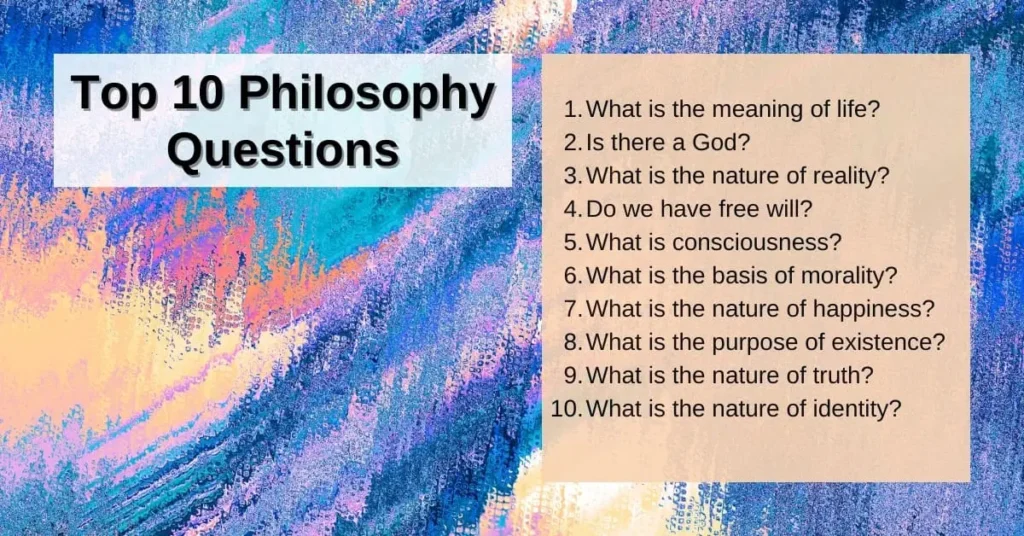

Philosphical questions have shaped human thinking for thousands of years. From ancient times to the modern world, people have asked big, powerful, and life-changing [philosophical questions] about existence, truth, happiness, and morality. These questions are not just for scholars or professors. They are for everyone — students, parents, leaders, and dreamers alike.
Have you ever wondered:
- Why are we here?
- What is the meaning of life?
- What is right and wrong?
- Do we truly have free will?
If so, you are already thinking about philosphical questions.
In this detailed guide, we will explore the world of philosophy in simple Grade 7 English. We will learn about its history, major thinkers, types of questions, and how asking philosophical questions can improve our lives.
Let’s begin this exciting journey of thought.
What Are Philosophical Questions?
Philosphical questions are deep questions about life, reality, knowledge, values, and human nature. They do not always have simple or clear answers. Instead, they invite discussion, reflection, and careful thinking.
Unlike science questions, which often have exact answers, philosphical questions explore ideas that are open to debate.
Examples of Philosophical Questions
- What is the meaning of life?
- Does God exist?
- What is truth?
- Are humans naturally good or evil?
- Is happiness the purpose of life?
These questions push us to think beyond daily routines. They encourage us to explore our beliefs, values, and understanding of the world.
A Brief History of Philosophical Questions
Philosophy began in ancient times. Some of the earliest recorded philosophical thinkers lived in ancient Greece, India, and China.
Ancient Greece
One of the most famous philosophers was Socrates. He believed that asking questions was the best way to discover truth. He often said, “The unexamined life is not worth living.”
Another great thinker was Plato, a student of Socrates. Plato wrote many dialogues about justice, knowledge, and the soul.
Later, Aristotle developed ideas about logic, ethics, and science. His work influenced education for centuries.
Ancient China
In China, Confucius focused on moral values, respect, and social harmony. His teachings shaped Asian cultures for thousands of years.
Ancient India
In India, thinkers who wrote the Upanishads explored deep questions about the soul, reality, and the universe.
Clearly, philosphical questions are not new. Humans have always been curious about life’s mysteries.
Major Types of Philosophical Questions
Philosophy is divided into different branches. Each branch asks a different kind of question.
Metaphysical Philosophical Questions
Metaphysics asks about reality and existence.
Examples:
- What is real?
- Does the soul exist?
- Is there life after death?
Metaphysical philosphical questions deal with things we cannot see or touch but still wonder about.
Epistemological Philosophical Questions
Epistemology is the study of knowledge.
Examples:
- What is knowledge?
- How do we know what is true?
- Can we trust our senses?
These philosphical questions help us understand how learning works.
Ethical Philosophical Questions
Ethics focuses on right and wrong.
Examples:
- What makes an action good?
- Is lying ever acceptable?
- Should we always tell the truth?
Ethical philosphical questions guide laws, leadership, and daily decisions.
Political Philosophical Questions
Political philosophy studies society and government.
Examples:
- What is justice?
- What makes a good government?
- Should freedom have limits?
These philosophical questions shape nations and policies.
Existential Philosophical Questions
Existentialism explores human purpose and freedom.
One famous thinker was Jean-Paul Sartre. He believed that humans create their own meaning.
Existential philosphical questions include:
- What is my purpose?
- Am I free to choose my path?
- Why do I feel alone sometimes?
Why Philosophical Questions Matter in Everyday Life
You might think philosophy is only for universities. But that’s not true. Philosphical questions affect our daily lives more than we realize.
They Improve Critical Thinking
When we ask philosphical questions, we learn to:
- Analyze ideas carefully
- Listen to different opinions
- Think before making decisions
This skill helps in school, work, and relationships.
They Help Build Character
By asking ethical philosphical questions, we learn values such as:
- Honesty
- Fairness
- Respect
- Responsibility
These qualities shape good citizens and strong leaders.
They Encourage Open-Mindedness
Philosophy teaches us that different people may have different answers. That’s okay! It helps us accept diversity.
Famous Philosophical Questions That Changed the World
Throughout history, certain philosphical questions have shaped civilizations.
What Is Justice?
In his famous book The Republic, Plato explored justice. He asked what makes a fair society.
This question still influences law systems today.
What Is the Meaning of Life?
This question has inspired religions, books, and even modern psychology. Thinkers like Viktor Frankl believed that finding meaning gives life purpose, even during suffering.
Do Humans Have Free Will?
Are we free to choose, or is everything planned by fate?
This philosophical question affects religion, law, and moral responsibility.
Image: A Thinker Reflecting on Philosophical Questions
This image shows someone thinking deeply. It reminds us that philosphical questions often require quiet reflection and patience.
How to Ask Good Philosophical Questions
Not every question is philosophical. A good philosophical question usually:
- Has no simple answer
- Encourages discussion
- Challenges assumptions
- Explores big ideas
For example:
Instead of asking, “What time is it?”
Ask, “What is time?”
See the difference? One is factual. The other is philosophical.
Philosophical Questions for Students
Young minds are naturally curious. Here are some simple philosophical questions for students:
- Is it ever okay to break a rule?
- What makes someone a true friend?
- Is happiness more important than success?
- Should animals have rights?
- What makes life valuable?
Discussing these philosphical questions in classrooms helps students grow emotionally and intellectually.
Image: Group Discussion on Philosophical Questions
This image shows students sharing ideas. Philosophy grows stronger through conversation and respectful debate.
Table: Categories of Philosophical Questions and Examples
| Branch of Philosophy | Main Focus | Example Philosophical Questions |
|---|---|---|
| Metaphysics | Reality and existence | Does the soul exist? |
| Epistemology | Knowledge and truth | How do we know something is true? |
| Ethics | Right and wrong | Is lying ever justified? |
| Political Philosophy | Government and society | What makes a fair society? |
| Existentialism | Meaning and freedom | What is my purpose in life? |
This table makes it easier to understand different types of philosphical questions.
Philosophical Questions in Modern Times
Today, philosphical questions are more important than ever.
Technology and Ethics
With artificial intelligence and social media, we now ask:
- Should robots have rights?
- Is privacy more important than security?
- Can technology replace human connection?
These modern philosphical questions guide laws and innovations.
Environmental Philosophy
We also ask:
- Do humans have the right to harm nature?
- Are we responsible for future generations?
Such philosphical questions help protect the planet.
How Philosophical Questions Build Wisdom
Wisdom is not just knowledge. It is the ability to use knowledge wisely.
Philosphical questions help us:
- Reflect before acting
- Understand consequences
- Grow emotionally
- Accept uncertainty
As the famous philosopher Immanuel Kant once explored, humans must think independently and act responsibly.
When we ask philosphical questions, we become wiser, calmer, and more thoughtful.
Common Mistakes When Thinking About Philosphical Questions
Let’s be honest — thinking deeply can be tricky. Here are common mistakes:
- Believing there is only one correct answer
- Refusing to listen to others
- Avoiding difficult topics
- Mixing emotions with logic without balance
Philosophy teaches balance — heart and mind working together.
Philosphical Questions and Personal Growth
Asking philosphical questions can transform your life.
It helps you:
- Discover your values
- Understand your goals
- Build confidence
- Improve communication skills
You don’t need a degree to be philosophical. All you need is curiosity and courage.
Frequently Asked Questions (FAQs) About Philosphical Questions
What are philosophical questions in simple words?
Philoophical questions are deep questions about life, truth, right and wrong, and human purpose.
Why are philosphical questions important?
They improve thinking skills, help build character, and encourage open discussion.
Can children understand philosphical questions?
Yes! Children naturally ask deep questions. Philosophy helps guide their curiosity in a positive way.
Do philosophical questions always have answers?
Not always. Some philosophical questions remain open for debate, and that’s perfectly okay.
How can I start thinking about philosphical questions?
Start by reflecting on daily experiences. Ask “why” and “what if” about common situations.
Conclusion: The Lifelong Journey of Philosophical Questions
Philosphical questions are powerful tools for understanding ourselves and the world. They are not just academic ideas. They are living, breathing conversations that shape families, schools, and nations.
By asking philosphical questions, we grow wiser, kinder, and more thoughtful. We learn to listen. We learn to reflect. And most importantly, we learn that life is not just about answers — it’s about the journey of thinking.
So go ahead — ask bold philosphical questions. Think deeply. Speak kindly. And remember, every great discovery begins with a simple question.
In the end, philosophical questions don’t just change how we think — they change who we become.