

The chief of staff job description is becoming more important in today’s fast-moving world. From big companies to government offices, a Chief of Staff helps leaders stay organized, focused, and successful. If you’ve ever wondered what this role really means, what skills it needs, and how someone can become one—well, you’re in the right place!
This article will explain everything in simple, easy-to-understand English. Let’s dive in and explore this exciting and influential career.
What Is a Chief of Staff Job Description?
The chief of staff job description explains the duties, skills, and responsibilities of a person who works closely with a top leader, like a CEO, president, or director.
In simple words, a Chief of Staff is like a right-hand person. They help the leader:
- Manage daily tasks
- Make important decisions
- Communicate with teams
- Stay focused on big goals
Think of them as the person who keeps everything running smoothly behind the scenes.
Why Is the Chief of Staff Role Important?
A Chief of Staff plays a key role in making sure an organization works well. Without this role, leaders may feel overwhelmed with too many tasks.
Here’s why this role matters:
- Helps leaders save time
- Improves team communication
- Keeps projects on track
- Solves problems quickly
- Supports decision-making
In short, they bring order to chaos—and that’s a big deal!
Main Responsibilities in a Chief of Staff Job Description
Let’s break down the most common duties you’ll find in a chief of staff job description.
Daily Responsibilities
- Planning meetings and schedules
- Managing emails and messages
- Preparing reports and documents
- Coordinating with different departments
Strategic Responsibilities
- Helping set company goals
- Tracking progress on projects
- Giving advice to leadership
- Making sure plans are followed
Communication Duties
- Acting as a link between teams
- Sharing important updates
- Handling sensitive information
A Chief of Staff wears many hats—and does it with confidence!
Key Skills Required for a Chief of Staff
To succeed in this role, a person needs a mix of soft and hard skills.
Must-Have Skills
- Leadership skills – guiding teams and making decisions
- Communication skills – speaking and writing clearly
- Problem-solving skills – finding smart solutions
- Time management – handling many tasks at once
- Organizational skills – keeping everything in order
Bonus Skills
- Emotional intelligence
- Strategic thinking
- Tech knowledge
- Negotiation skills
Without these skills, the role can feel overwhelming—but with them, it becomes exciting!
Educational Requirements and Background
Most Chief of Staff roles require a good education and experience.
Common Requirements
- Bachelor’s degree (business, management, or similar)
- Master’s degree (optional but helpful)
- Work experience in leadership roles
Helpful Experience
- Project management
- Team leadership
- Administrative roles
In many cases, experience matters more than degrees.
Typical Work Environment
A Chief of Staff usually works in:
- Corporate offices
- Government organizations
- Non-profit groups
- Startups
They often work closely with top leaders and may have long working hours. But hey, the impact they make is worth it!
Chief of Staff vs Executive Assistant
People often confuse these two roles, but they are quite different.
| Feature | Chief of Staff | Executive Assistant |
|---|---|---|
| Role Level | Strategic | Administrative |
| Focus | Big decisions | Daily tasks |
| Authority | High | Moderate |
| Involvement | Planning & leadership | Scheduling & support |
Both roles are important, but a Chief of Staff has more influence on strategy.
Career Path to Becoming a Chief of Staff
Becoming a Chief of Staff doesn’t happen overnight. It takes time and effort.
Steps to Follow
- Get a relevant degree
- Gain work experience
- Develop leadership skills
- Build strong networks
- Learn from mentors
Many people move into this role after years of hard work in management or operations.
Challenges in the Chief of Staff Role
Let’s be real—this job isn’t always easy.
Common Challenges
- Handling high pressure
- Managing difficult situations
- Balancing many responsibilities
- Working long hours
But with the right mindset, these challenges can turn into opportunities.
Rewards and Benefits of Being a Chief of Staff
Now for the good part!
Why People Love This Role
- High salary
- Close work with top leaders
- Big impact on decisions
- Career growth opportunities
It’s a role that offers both power and purpose.
Visualizing the Chief of Staff Role
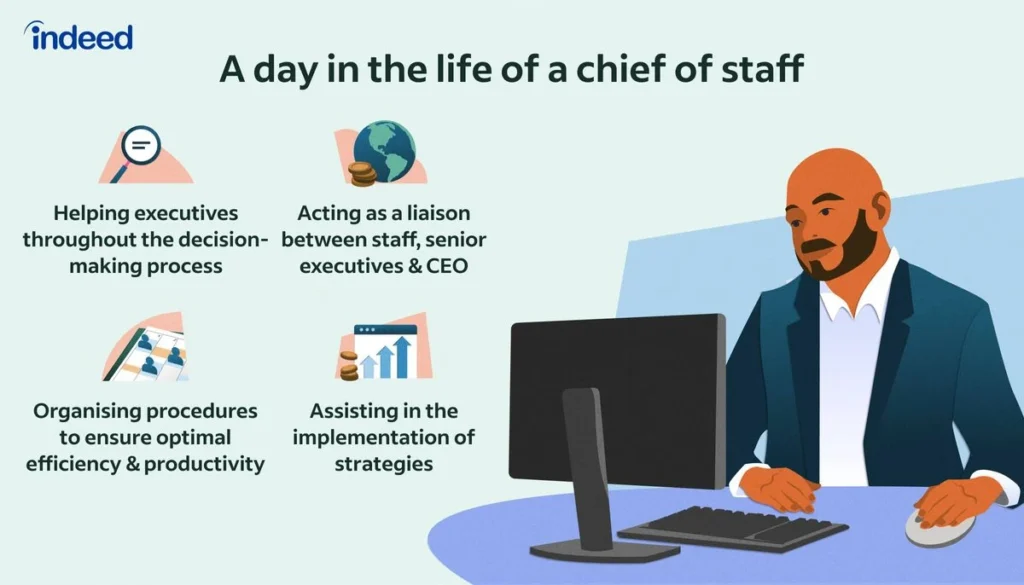
This image shows how a Chief of Staff works with leaders and teams to guide decisions and strategy.
A Day in the Life of a Chief of Staff
Wondering what a normal day looks like? Well, there’s no “normal” day—but here’s an example:
- Morning: Review emails and plan meetings
- Midday: Attend strategy sessions
- Afternoon: Work on projects and reports
- Evening: Update the leader and prepare for next day
Every day is different—and that keeps things interesting!
Tools Used by a Chief of Staff
To stay organized, a Chief of Staff uses many tools:
- Project management software
- Communication apps
- Calendar tools
- Data analysis tools
These tools help them work smarter, not harder.
Second Visual Insight
These visuals highlight planning, teamwork, and leadership—core parts of the chief of staff job description.
Future of the Chief of Staff Role
The future looks bright for this role!
More companies are realizing the value of having someone who can:
- Manage operations
- Support leadership
- Drive strategy
As businesses grow, the demand for Chiefs of Staff will continue to rise.
FAQs About Chief of Staff Job Description
What does a Chief of Staff do daily?
They manage schedules, attend meetings, support leaders, and oversee projects.
Is Chief of Staff a high-level position?
Yes, it is a senior role with strong influence on decisions.
Do you need a degree to become a Chief of Staff?
Usually yes, but experience is also very important.
How is a Chief of Staff different from a manager?
A manager leads a team, while a Chief of Staff supports top leadership and strategy.
Is this job stressful?
It can be, but it’s also very rewarding and exciting.
Conclusion: Understanding the Chief of Staff Job Description
The chief of staff job description is all about leadership, organization, and strategy. It’s a role that sits at the heart of decision-making and helps leaders perform at their best.
From managing daily tasks to shaping big plans, a Chief of Staff does it all. Sure, the job can be challenging—but with the right skills and mindset, it can also be one of the most rewarding careers out there.
If you’re someone who loves solving problems, working with leaders, and making a real impact, then this role might just be your perfect fit!